The World of the Knight and the Squire
In 16th century France, We follow the reign of a growing empire, encroaching on it’s border countries, with Spain as the target for the first campaign.
This is the empire that the Knight is exiled from. An empire built on expansion through overwhelming military power. A world that the Knight does not belong to, yet has such tight seals that he cannot escape.
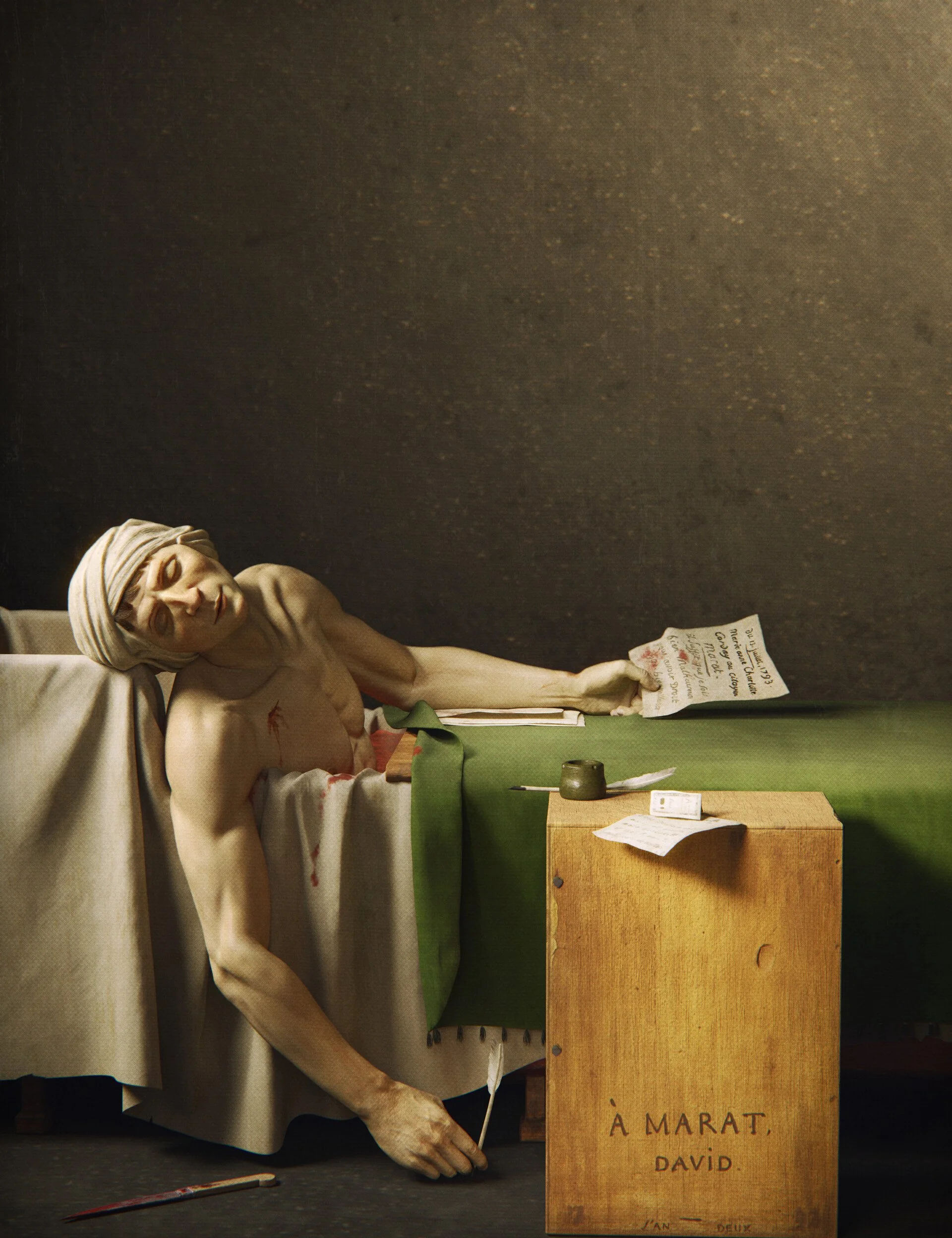
Rome has always had historical precedent in France as well, in less explicit ways. In the Revolution of 1789, Roman imagery inspired much of the protest art made during the war. Jacque-Louis David’s The Death of Marat (Right) borrows its pose from Roman reliefs, specifically ones made to honor fallen heroes.
I wanted to explore an inverse to this idea, focusing on the imperial aspects of Rome instead of its more republican ideals.
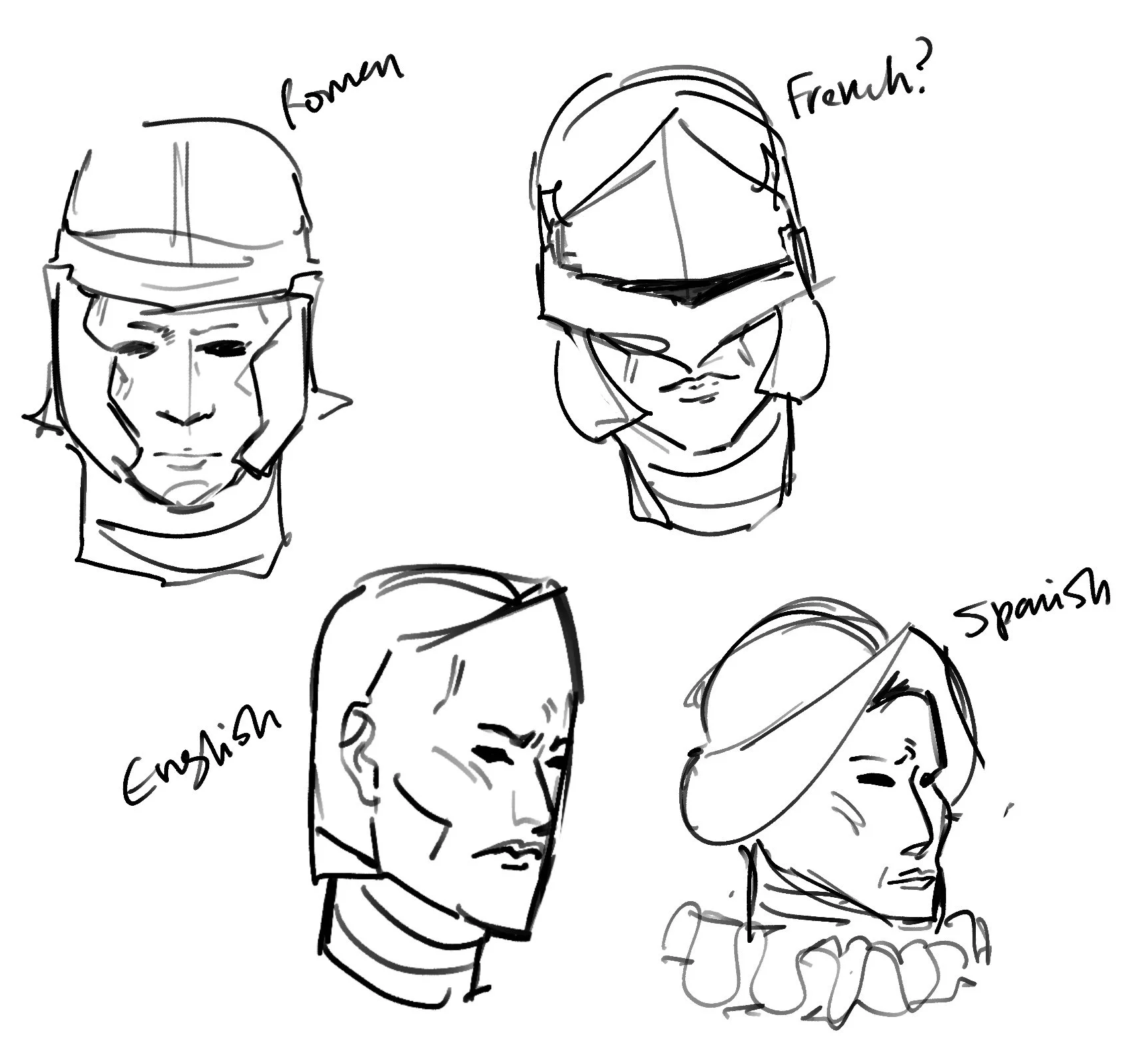
Military nations were always going to serve a part in the Knight and the Squire, as a counter to the Knight, and his own potential growth through the story. France needed a symbol for its military growth, something to represent an ideology at odds with the Knight. Rome was chosen for several reasons.
Rome’s military and imperial system is part of what made it famous historically throughout Europe. The presence of ruined Roman architecture has always been a sign of the power and width that the empire once had. This overwhelming footprint and visual identity left by the romans was helpful in designing my France.